

Exosome hair serum is rapidly gaining attention as a cutting-edge approach to scalp and hair regeneration, but can it really transform thinning hair more effectively than proven classics like proven treatments like minoxidil or peptide serums? In this comprehensive guide, you’ll discover what exosome hair serums truly are, how they work, what science says, and exactly how to fit them into a realistic hair regrowth routine.
Key Takeaways
- Current clinical data for exosome hair serums is limited to injectable or in vitro use, not topicals.
- Early studies show promising, rapid improvements in hair density and thickness with very few side effects, but costs, market data, and long-term safety remain unclear.
- Exosome-based serums work differently from minoxidil or peptide serums, using stem cell-derived vesicles that may more directly trigger hair regeneration at the genetic level.
- What Are Exosome Hair Serums and How Do They Work?
- How to Add Exosome Hair Serum to Your Routine
- What Most Reviews Miss: Pitfalls, Gaps, and Proven Results
- Conclusion
- FAQ
What Are Exosome Hair Serums and How Do They Work?
Exosome hair serums are advanced scalp formulas designed to deliver exosomes—tiny cell-derived vesicles—from sources like mesenchymal stem cells (MSC), umbilical cord tissue, or placental tissue. The core idea is that these exosomes transport regenerative signals that can stimulate dormant hair follicles, increase hair density, and repair the scalp’s microenvironment at a much deeper level than typical growth tonics.
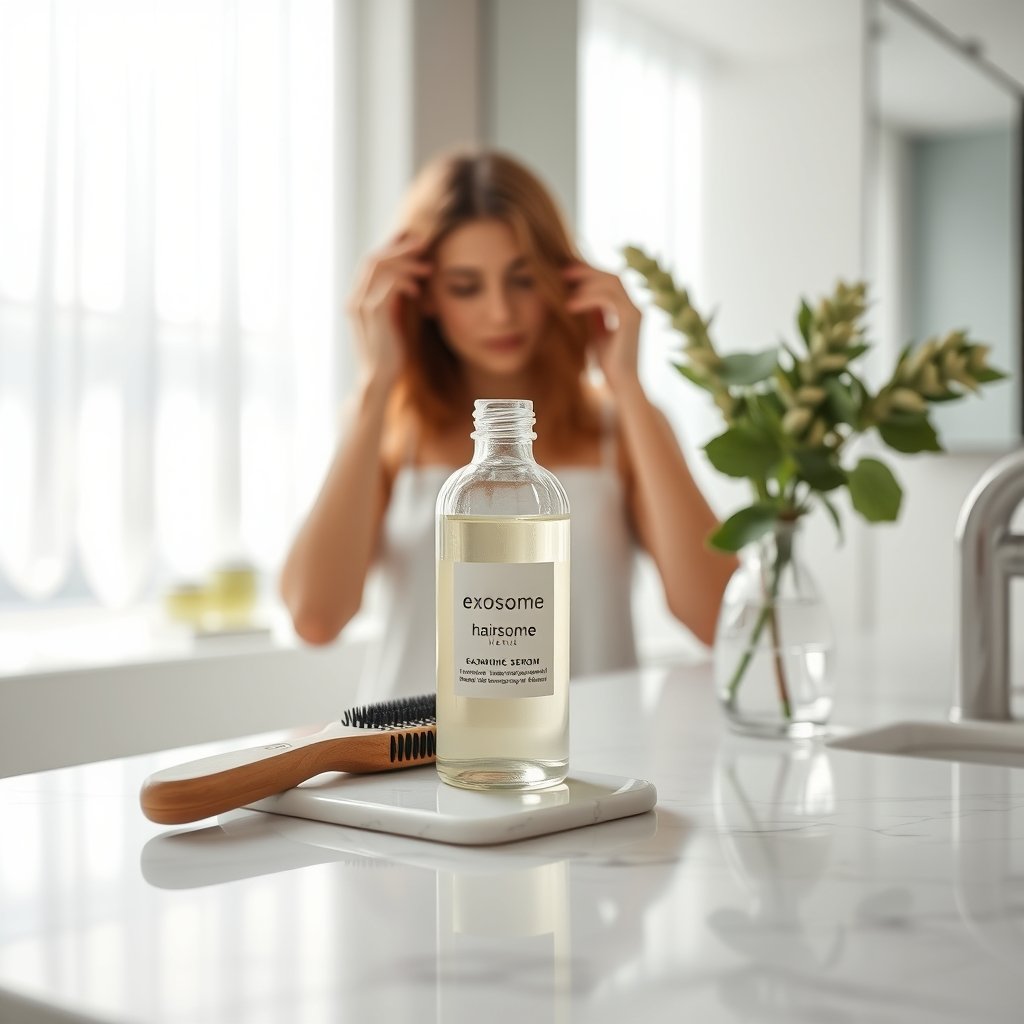
But here’s what really matters: as of 2024, published research on exosome hair solutions is almost entirely based on injections, not topical serums. For example, several phase I and II clinical trials from 2022-2024 showed intradermal exosome injections can boost hair density by +13 to +67 hairs/cm² within 6-12 weeks, which is noticeably faster and more significant than minoxidil.
Notably, a 2024 Iranian trial (view study) reported that placental-derived MSC exosome injections raised hair density from 96.5 to 163.5 hairs/cm², and hair diameter from 0.049 mm to 0.059 mm. Patient satisfaction and safety were extremely high—no serious side effects reported.
In vitro studies also show exosomes upregulate follicular and vascular regeneration genes, potentially supporting long-term follicle health (see summary).
Why the excitement? Unlike minoxidil, which mainly prolongs hair growth cycles via vasodilation, or peptides, which signal follicles to produce more structural proteins, exosomes may directly reawaken and coordinate multiple regeneration signals by delivering actual repair “blueprints” from stem cells. This cell-to-cell messaging is much closer to “biohacking regeneration” than simple topical stimulation.
However, since topical exosome serums have not yet been studied in published clinical trials, claims for over-the-counter versions must be seen as promising, but not guaranteed. Injectable exosome treatments require medical expertise, strict isolation/purity controls, and are distinct from simple commercial serums you can apply at home.
How to Add Exosome Hair Serum to Your Routine
If you’re considering trying exosome hair serum, here’s a realistic, stepwise approach for maximum benefit and safety—especially given the current limits of clinical research:
- Optimize Your Scalp Foundation: Before introducing any high-tech serum, ensure your scalp barrier is healthy by using gentle cleansers, regular exfoliation, and possibly targeted barrier repair routines. See this scalp barrier guide for the fundamentals.
- Apply Exosome Serum After Cleansing: Most topical exosome serums should be applied to a clean, towel-dried scalp (preferably after gentle exfoliation, such as a mild scalp scrub session). Section your hair and dispense drops in thinning areas, massaging gently.
- Consider Microneedling: While home serums haven’t been proven in clinical studies, in-office exosome therapies use fine injections or microneedling (learn more about safe at-home methods) to boost penetration. If adding microneedling, always sterilize the tool, roll gently, and apply serum immediately after.
- Be Consistent—but Realistic: Apply your exosome serum daily or as directed by the brand. Track changes in hair density and thickness over at least 3-6 months, just as clinical studies do.
- Layer With Proven Actives (Optional): Since exosomes are still unproven topically, it’s smart to continue using proven treatments like minoxidil, peptide serums, or topical density boosters (see hair density serums), but space them at least 30 minutes apart.
- Monitor for Side Effects: Though no published trials have found side effects for injectable exosome therapies, watch out for irritation or breakouts with new topicals. If irritation occurs, stop immediately and consult a dermatologist.

- Maintain Lifestyle Factors: Support any topical routine with a comprehensive hair repair routine—address diet, stress, and overall scalp health for the best odds of regrowth.
If in doubt, consult a board-certified dermatologist about advanced options (like in-office exosome injections) especially if you have aggressive or sudden hair thinning. The science is evolving quickly—stay up to date with trusted clinical resources.
What Most Reviews Miss: Pitfalls, Gaps, and Proven Results
There’s plenty of buzz about exosome-based scalp serums, but here’s what most guides don’t tell you:
- Lack of Clinical Evidence for Topical Serums: Every published study to date uses exosome injections or cell culture models, not over-the-counter serums you can buy and self-apply (view study).
- Unknown Costs and Access: Pricing and monthly cost info for real exosome hair serums is unavailable as of 2024. In-office injection sessions may be expensive and are not widely offered.
- No User Complaints—but Also No User Reviews: No studies or reports detail negative user outcomes, but there is little long-term or real-world feedback available (external review).
- No Regulatory Approval: There is no formal FDA or EMA guidance on exosome topical serums for hair regrowth. Clinical-grade validation is urgently needed, even though current trials show excellent safety for in-office uses.
How do exosome hair serums compare to other well-known actives for hair regrowth? Here’s a straightforward breakdown:
| Serum Type | Source | Main Delivery | Mechanism | Response Time | Safety/Tolerability | Proven Efficacy (Study) |
|---|---|---|---|---|---|---|
| Exosome Serum | Placental, Foreskin, Umbilical Cord MSC | Injection (studied); Topical (unproven) | Signals follicle regeneration, upregulates VEGF and cycling genes | Rapid (6-12 weeks) | High (no adverse events in studies) | +13 to +67 hairs/cm² in 6-12 weeks[1] |
| Minoxidil | Chemical (synthetic) | Topical | Vasodilation, prolongs growth phase | Moderate (3-6 months) | Low-moderate (can cause irritation/itch) | +1-2 hairs/cm² per month[2] |
| PRP (Platelet-Rich Plasma) | Autologous blood | Injection | Growth factors, stimulates weak follicles | Moderate (3-6 months) | Moderate (rare bruising, swelling) | +10 to +40 hairs/cm² in 12 weeks[2] |
| Peptide Serums | Synthesized peptide chains | Topical | Signal to build proteins, support hair shaft | Moderate (3-6 months) | High (rare allergies) | Limited clinical data |
For those with persistent scalp inflammation or barrier issues, targeting the scalp barrier specifically is often a crucial—yet overlooked—step before using advanced serums.

Finally, while exosomes hold huge promise for fast, regenerative hair regrowth, long-term safety, market availability, and standardized testing for topicals are still works in progress. Stay tuned as more real-world data emerges.
Conclusion
Exosome hair serums represent a potentially game-changing leap in scalp and hair rejuvenation, using advanced cell signaling rather than old-school chemical stimulation. However, as of 2024, exosome hair serum is best considered an exciting, experimental option—especially when compared to standard, well-studied serums like minoxidil or peptides. If you’re eager to try one, combine it with proven basics and a strong scalp care foundation, and track your progress with realistic expectations.
Want help building a full repair routine? Explore the hair thinning repair guide or check out a comprehensive density serum routine for proven alternatives you can start using now.
Ready to learn if exosome hair serum fits your hair regrowth journey? Monitor new research, and consult your dermatologist for the safest options available today.
FAQ
Are there any real-world user reviews or complaints about exosome hair serums?
No. As of mid-2024, there are no published user complaints, negative reviews, or long-term follow-up studies for exosome hair serums. Clinical studies report high satisfaction and no adverse effects with injections, but topicals remain anecdotal.
What’s the difference between exosome hair serum and minoxidil?
Minoxidil extends the hair growth phase and increases blood flow to follicles. Exosome serums (when injected) deliver stem cell-derived vesicles that carry regenerative instructions and may reactivate dormant follicles on a genetic level. Neither has been tested head-to-head as topical serums.
Can I use exosome serums with other scalp products?
Yes, but give at least 30 minutes between products to reduce ingredient interference. Consider layering exosome serum with traditional actives (like minoxidil or peptide serums) for a multi-targeted approach. Always patch test first.
Are exosome hair serums FDA approved?
No. The FDA and other regulatory bodies have not issued specific approvals or guidelines for exosome-based hair serums. Most scientific evidence is for prescription-only in-office injection treatments, not over-the-counter topicals.
How long until I see results with exosome hair serum?
For injection-based treatments, published studies showed results in as little as 6 weeks, with continued improvements over 3-6 months. There are no data yet for topical serums—expect slower or less dramatic changes until more evidence emerges.