

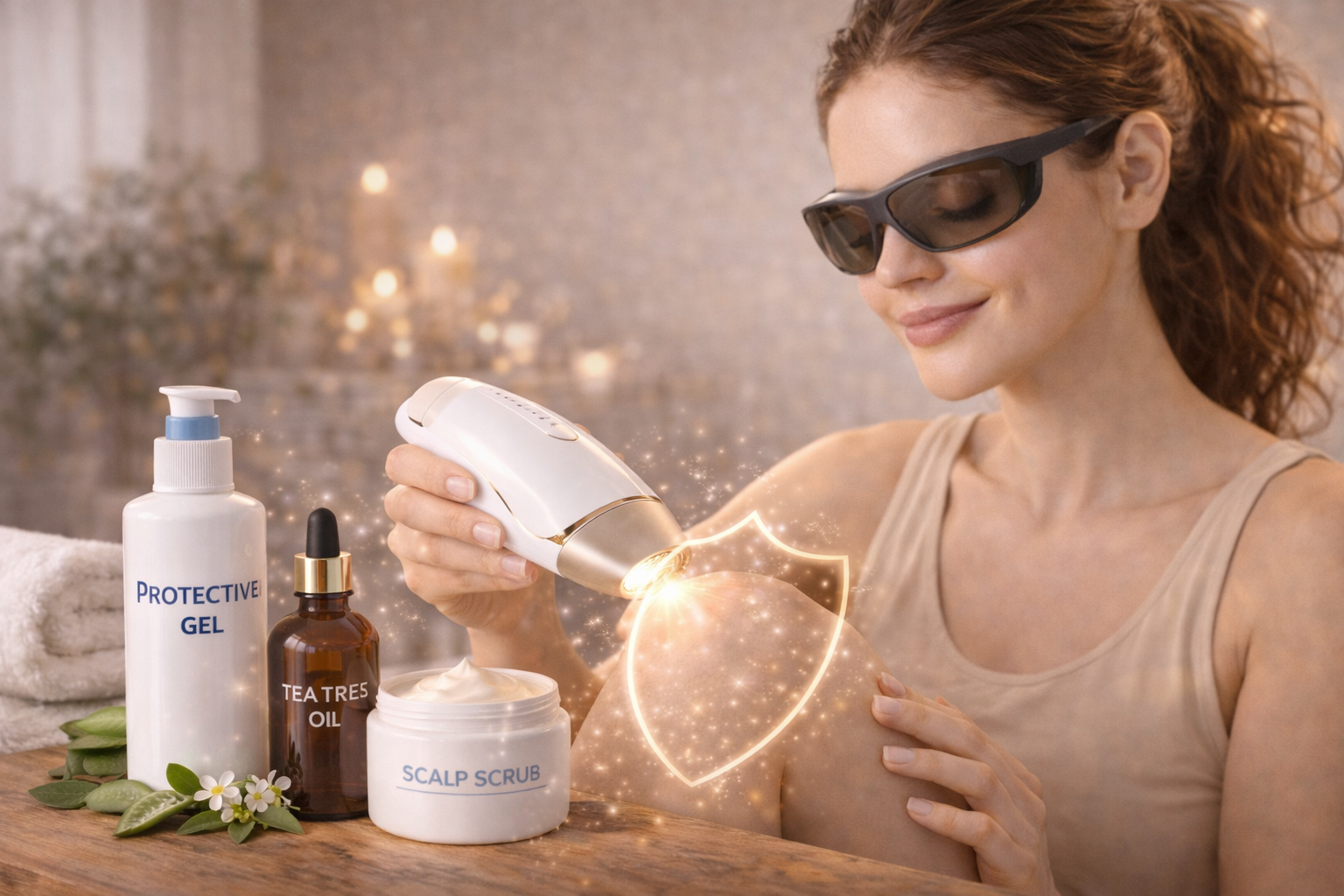
How Safe Is IPL Hair Removal Really? (Especially If You Have Darker Skin)
IPL hair removal safety is a big concern—especially if you have deeper skin tones. With millions using at-home and in-clinic IPL devices, it’s crucial to separate the myths from the medically backed facts. Here’s what you need to know if you’re considering IPL.
Key Takeaways
- IPL is generally safe—with rare side effects like redness or pigmentation—but risk increases if used incorrectly or on darker skin with high fluence.
- Darker skin tones (Fitzpatrick III-VI) need specific safety steps, including cooling features and reduced energy levels.
- Common but underdiscussed risks include HSV reactivation, folliculitis, paradoxical hair growth, and post-inflammatory hyperpigmentation (PIH).
Table of Contents
- What Makes IPL Hair Removal Safe—or Not?
- How to Use IPL Safely Across All Skin Types
- Common Pitfalls Most People Miss (Especially on Darker Skin)
- Final Thoughts on IPL Hair Removal Safety
- FAQ
What Makes IPL Hair Removal Safe—or Not?
Intense Pulsed Light (IPL) hair removal works by targeting melanin in hair follicles with broad-spectrum light. When done correctly, it heats the follicle enough to reduce future growth. But safety relies deeply on skin tone, device specs, and user habits.
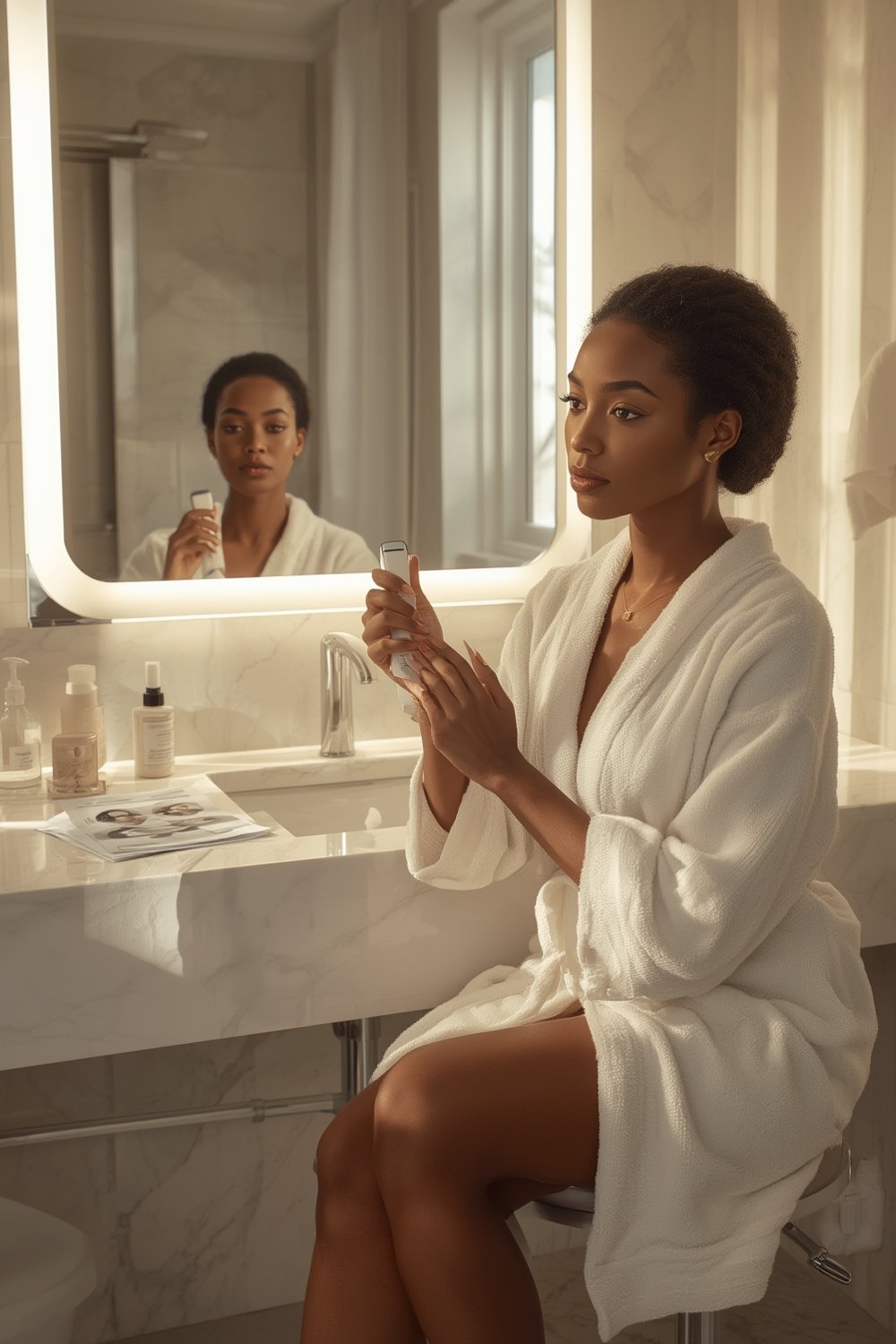
For lighter skin tones (Fitzpatrick I-III), the contrast between skin and hair makes IPL generally low risk. For darker skin (Fitzpatrick IV-VI), IPL’s broad light spectrum can be absorbed by skin melanin too, increasing the chance of burns and pigment problems.
In fact, medical literature warns that IPL is particularly difficult for skin of color, which can experience burning, paradoxical hair growth, and post-inflammatory hyperpigmentation (PIH).
How to Use IPL Safely Across All Skin Types
Whether you’re using a salon-grade or at-home IPL device, here’s how to protect your skin and get the best results.
- Check your Fitzpatrick skin type. If you’re type IV to VI, make sure your device has a skin tone sensor and offers low-energy settings (as low as 5 J/cm²).
- Avoid IPL if you: Have a recent sunburn, are pregnant or breastfeeding, or have a history of herpes simplex. IPL may trigger HSV outbreaks due to heat exposure. (source)
- shave the area. Waxing removes the follicle—IPL won’t work.
- Use chilled gel or in-built cooling systems to reduce the risk of burns and pigmentation, especially for darker complexions.
- Start at a low fluence (5-10 J/cm²), and gradually increase. Do not exceed 50 J/cm²—and stay below 30 for darker skin types.
- Space your sessions: For body: once every 2 weeks. For face: every 3–4 weeks. Overuse increases risk and reduces performance.
- Post-treatment care: Avoid direct sun for 2 days. Use SPF 50, and apply barrier-supporting moisturizers like those in this barrier repair routine.
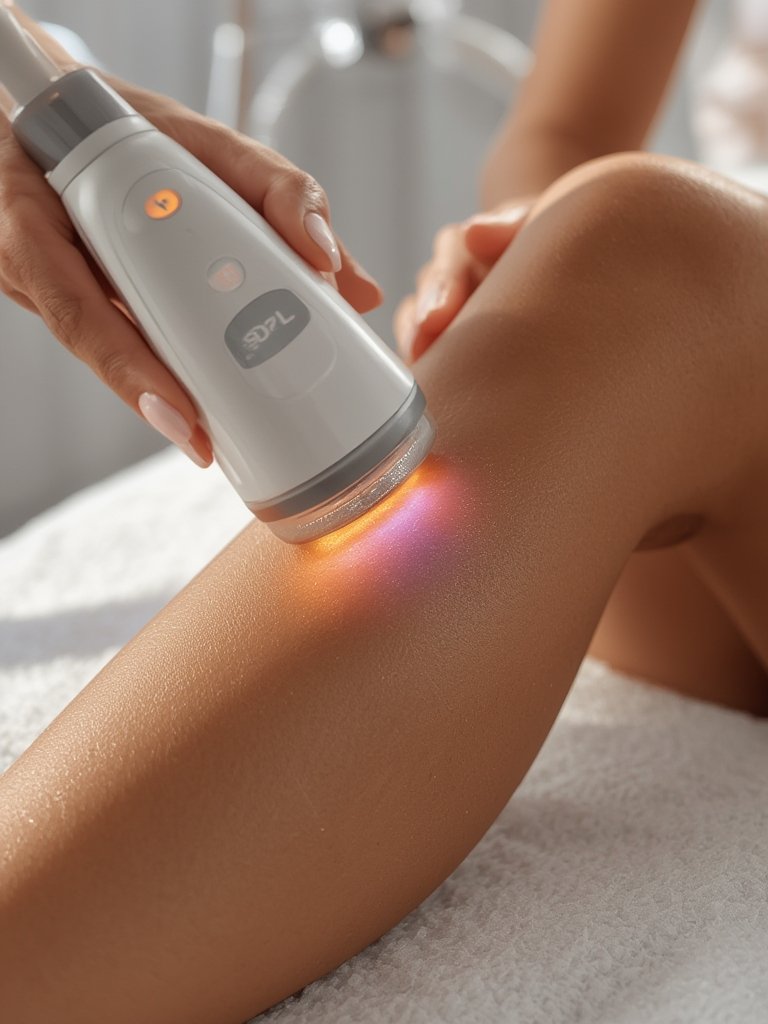
If you’re considering home use, this comparison of top devices may help: check out our full guide on top IPL device picks for all skin tones.
Common Pitfalls Most People Miss (Especially on Darker Skin)
IPL usage isn’t always straightforward. Many users experience unexpected effects, especially if they’re using off-brand or unregulated tools.
1. HSV Reactivation Risks
IPL’s thermal impact can reactivate herpes simplex virus, especially around the lip and chin areas. This is often omitted from most IPL safety guides. AVOID use if you have a known history.
2. Folliculitis Can Develop Fast
One 2024 case study found folliculitis developed in 6.4% of laser patients—sometimes within a day. While most cases are mild, it can be painful and inflamed if unmanaged.
3. Increased Hair Growth?
Known as paradoxical hypertrichosis, IPL can trigger more hair growth instead of less. This is more common in skin of color. Reported cases include unwanted facial growth in women using IPL around the cheek or chin.
4. Safety Varies By Device
Not all IPL devices are equal. FDA-cleared devices with skin tone sensors, cold tips, and precision filters fare better than generic versions. Prefer models with adjustable fluence ranges between 5-50 J/cm².
5. IPL vs Laser: Not Always Interchangeable
| Aspect | IPL Safety | Laser Hair Removal Safety |
|---|---|---|
| Common Effects | Pain, redness, PIH, stinging WebMD |
Irritation, pigment shifts (esp. dark skin) Mayo Clinic |
| Complication Rate | Low NIH |
0.69% – PubMed |
| Best For | Light/medium skin with dark hair | Dark or light skin, depending on specific wavelength |
Want to improve your skin post-IPL? See this skin cycling routine to accelerate barrier recovery and prevent irritation from treatments.
Final Thoughts on IPL Hair Removal Safety
When used correctly, IPL is a safe, convenient, and relatively low-risk option—just not without caveats. For those with darker skin, the key to IPL hair removal safety is proper fluence control, cooling mechanisms, and avoiding low-quality devices or off-label use.
Ready to try IPL or unsure if your skin type is suitable? Bookmark this guide, share it, and explore safe options in our top IPL device picks for all skin tones.
FAQ
Is IPL safe for Fitzpatrick Skin Type V or VI?
Yes—but only when using devices specifically tested for darker tones, with skin tone sensors and lower fluence settings (under 20 J/cm²). Use caution and always do a patch test.
How often can I use IPL at home?
Most protocols recommend every 2 weeks for the body and every 4 weeks for facial use. Over-treating won’t speed results and raises risk.
Can IPL cause permanent damage to skin?
Rarely. Most reactions (like redness or PIH) are temporary. Permanent scarring is usually due to overuse, improper fluence, or treating sunburned/tanned skin.
Does IPL work on all hair colors?
No. IPL is ineffective on gray, red, or very light blond hair due to low melanin. Consider electrolysis for these hair types.
Can I use IPL with other skin treatments?
You should avoid strong actives like retinol or acids for 48 hours before and after IPL. Focus on barrier repair and SPF. See this barrier repair guide for support routines.