

Introduction
Skin fasting is gaining popularity as a skincare strategy that promotes a break from all products. But does your skin truly “reset” when you stop applying creams, serums, or cleansers—or is it just another wellness trend with no backing? This guide gives you a clear, honest, and science-touched breakdown of what skin fasting is, how to do it correctly, and the key facts every skin-conscious person needs to know.
Key Takeaways
- There is no direct scientific research on skin fasting, but dietary fasting shows potential for skin improvement.
- Transitioning to minimal skincare can cause irritation or sensitivity, especially for dry or acne-prone skin types.
- Unexplored areas like microbiome changes and long-term effects highlight the need for more research.
Table of Contents
- Introduction
- What Is Skin Fasting and Why People Try It
- How to Do Skin Fasting the Right Way
- Science, Pitfalls, and What No One Tells You
- Conclusion
- Frequently Asked Questions
What Is Skin Fasting and Why People Try It
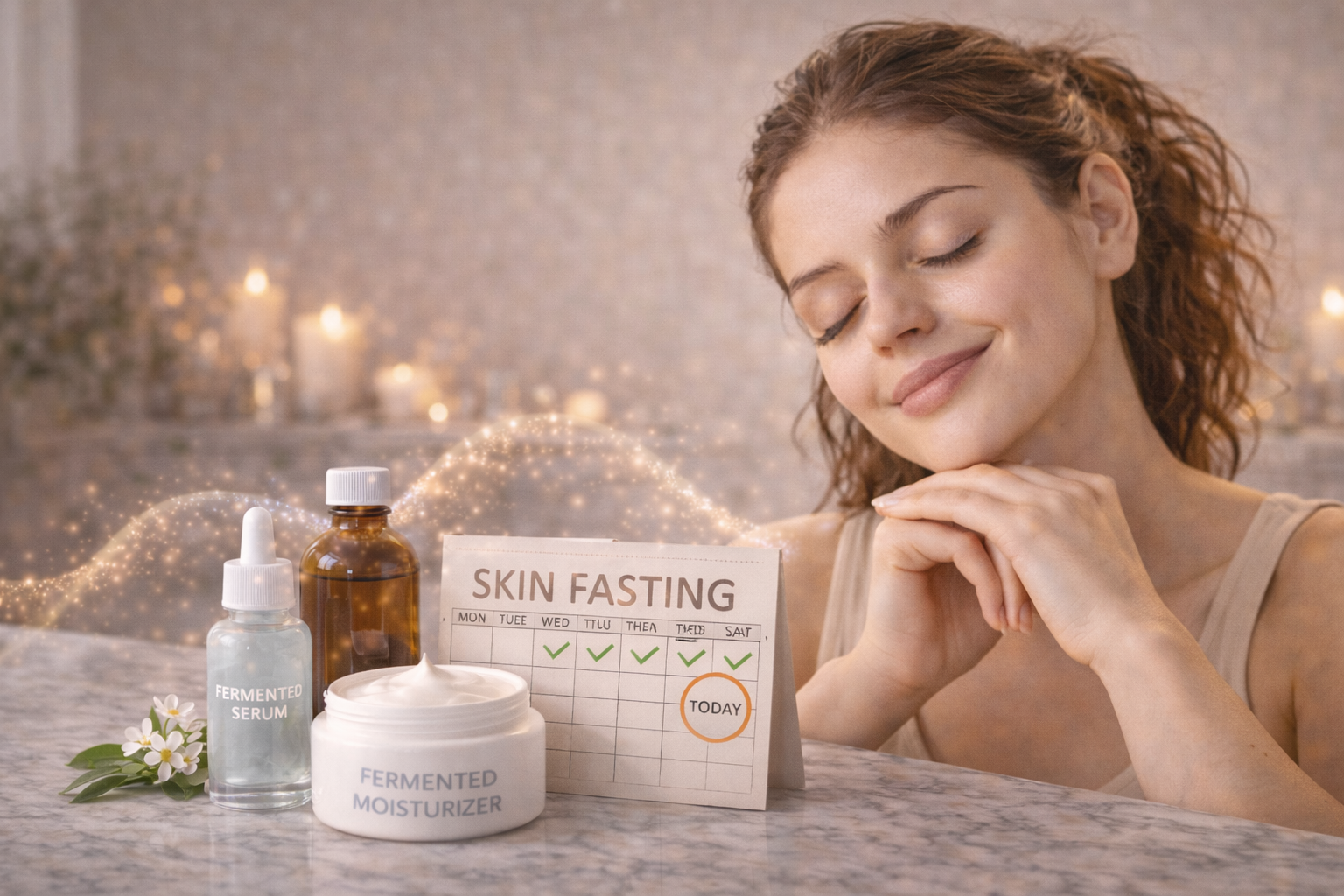
Skin fasting means intentionally skipping all skincare products for a period—usually a day to a week—to give your skin “a break.” It’s based on the idea that your skin can rebalance sebum, repair its barrier, and “breathe” when you’re not layering on toners, serums, and moisturizers daily.

The challenge? There’s no scientific study that directly gives skin fasting a green light. What we do have are findings from fasting-mimicking diet studies that show improved skin hydration (up to 25%) and texture. This hints that internal repair via autophagy and inflammation reduction could support the skin visually—but that’s from what you eat, not what you skip applying.
How to Do Skin Fasting the Right Way
Here’s a practical roadmap to help you try skin fasting safely without wrecking your barrier or triggering flare-ups.
Step 1: Prep Your Skin Barrier First
Do a skin barrier check 3 to 5 days before fasting by cutting down harsh actives like retinol or exfoliants. Look for signs like redness, peeling, or stinging. If present, delay your fast. Consider using a barrier repair moisturizer in advance to prevent unnecessary irritation.
Step 2: Choose the Right Frequency
Try “partial fasting” by skipping only some steps. For example, cleanse with only water and stop products for 24 hours. Or skin fast only at night 1–2 times a week based on how oily or balanced your skin feels.
Step 3: Watch and Track Responses
For a week, document how your skin feels and looks. Some tightness is normal, but if you break out, flake excessively, or itch, do not push further. Sometimes a skin cycling routine with alternated active and recovery nights may serve your barrier better than complete withdrawal.
Step 4: Reintroduce Gradually
Don’t jump back into your full skincare routine the next day. Add one product per day to monitor your skin’s tolerance and avoid flare-ups. Begin with hydrating and moisturizing steps first.
Science, Pitfalls, and What No One Tells You
While skin fasting sounds clean and minimalist, several risks and gaps exist—both clinically and practically.
What Science Actually Shows
There are zero direct clinical studies on abstaining from skin products. Instead, dietary fasting (like the ProLon FMD study) shows measurable benefits like:
- +25% skin hydration by day 11
- Better skin texture retention
- Reduced markers of aging due to autophagy
Another study on psoriasis patients using modified intermittent fasting (source) found reduced scaling and itching. But skin fasting (topical) has no data like this yet.
Comparison: Skin Fasting vs Minimal Skincare
| Aspect | Skin Fasting | Evidence-Based Minimal Skincare |
|---|---|---|
| Scientific Data | No direct studies | Strong backing for simplified routines |
| Skin Barrier Safety | Could worsen dryness or inflammation | Supports barrier with fewer but targeted ingredients |
| Recommended By Experts? | Largely anecdotal | Yes, especially for sensitive skin |
| Long-Term Impact | Unknown, not studied | Shown to reduce overexfoliation and irritation risks |
Common Pitfalls to Avoid
- Fasting with active breakouts can worsen inflammation.
- Skipping moisturizers during cold weather may cause barrier damage.
- Fasting every day, especially with sensitive skin, leads to peeling, tightness, or even stinging.
Instead of full fasting, some opt for low-input routines—just a gentle cleanser and lightweight moisturizer—similar to what’s proposed in hydration-centric skin layering methods.

Conclusion
While minimalist routines are a proven path to better skin for many, full-scale skin fasting lacks scientific grounding. Your barrier needs protection, especially with environmental stressors. A better approach may be simplifying your process using proven principles like skin cycling or combining inner-out beauty strategies like skin longevity supplements.
If you’re curious, try skin fasting short-term and monitor closely. Just don’t jump in blind. Want more barrier-friendly routines? Explore our latest science-backed guides to keep your skin calm, clear, and glowing.
Frequently Asked Questions
Is skin fasting safe for sensitive skin?
Usually not recommended. Sensitive skin often requires barrier support, and skipping products completely may cause irritation or flare-ups.
How long should I try skin fasting?
Start with 1 night. Evaluate how your skin feels the next day before committing to longer periods like 3 or 7 days.
Can skin fasting help with acne?
There’s no proof. Some people break out less, but others experience more pimples due to lack of barrier support. Results vary.
Does skin fasting reset your skin?
No strong scientific data supports this claim. The “reset” idea is anecdotal. It’s more about reducing overuse of strong actives or unnecessary products.
What’s better than skin fasting?
Following a minimalist skincare approach using products that protect and hydrate—like in glass skin routines or barrier-oriented routines—may offer safer, proven benefits.